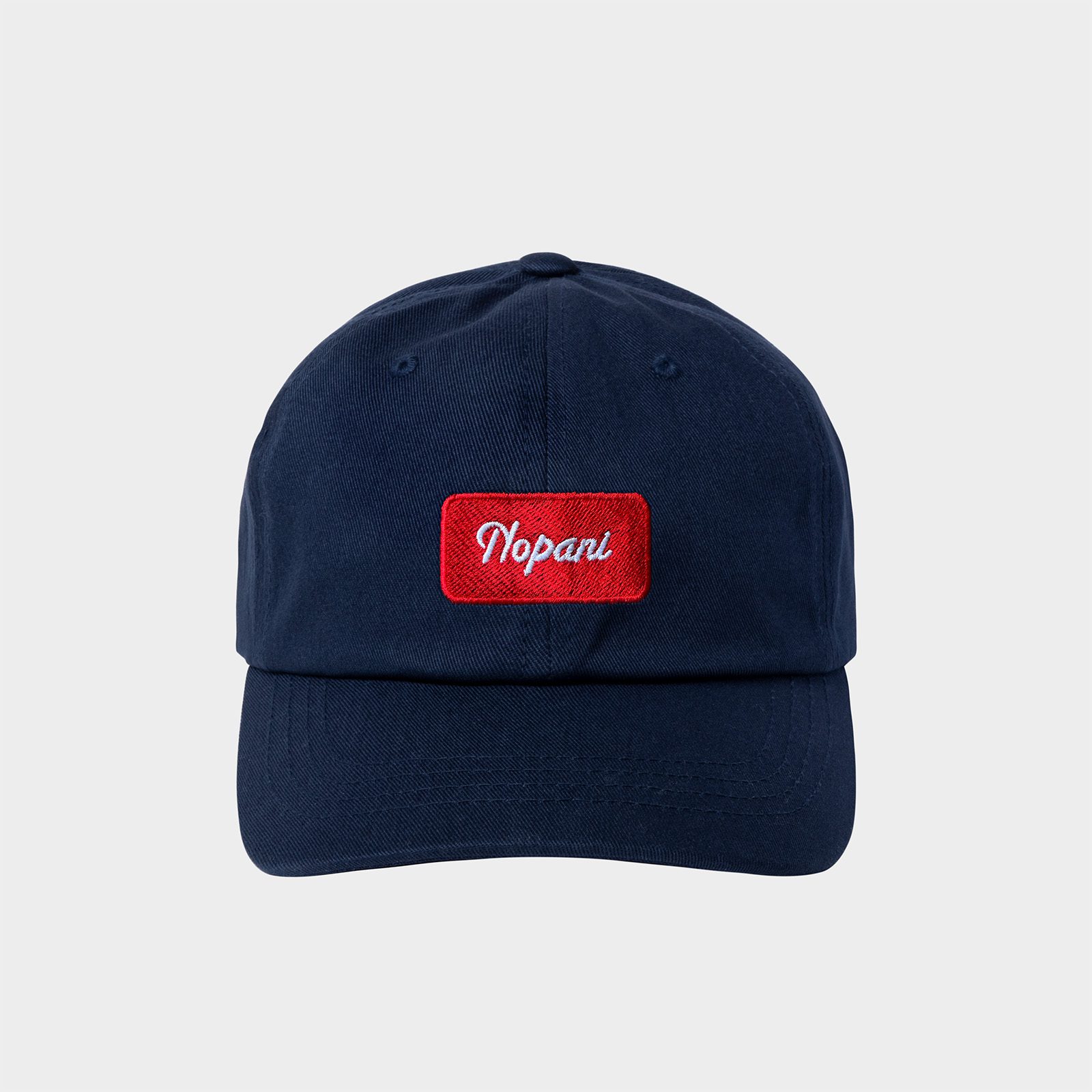
The proliferation of institutionally branded apparel—ranging from collegiate insignia to military regimentation—can be theorized as a strategic exercise in both semiotic territorialization and social identity consolidation. Within the framework of Social Identity Theory, these garments function as “wearable totems” that facilitate in-group cohesion; by donning the nomenclature of the entity, the individual signals a voluntary surrender of complete autonomy in favor of a collective consciousness, thereby reinforcing the psychological contract between the subject and the structure.

Simultaneously, this practice represents the operationalization of embodied cultural capital, wherein the institution leverages its constituents as mobile vectors of prestige. By transforming the human body into a site of visual hegemony, the institution does not merely advertise its existence but rather colonizes the social landscape, utilizing the wearer’s physical presence to project legitimacy, authority, and exclusivity into the public sphere.
Here is a breakdown of the two primary sociological frameworks that explain why wearing a simple cotton garment with a text feels so significant.
Social identity theory
Developed largely by Henri Tajfel and John Turner in the 1970s, this theory suggests that a huge portion of our self-esteem is derived from the groups we belong to.
- Categorization: the human brain naturally categorizes people to make sense of the world. By putting on a garment with a specific name (e.g., “U.S. Marine Corps” or “MIT”), you are performing an act of self-categorization. You are no longer just an individual; you are a representative of a category.
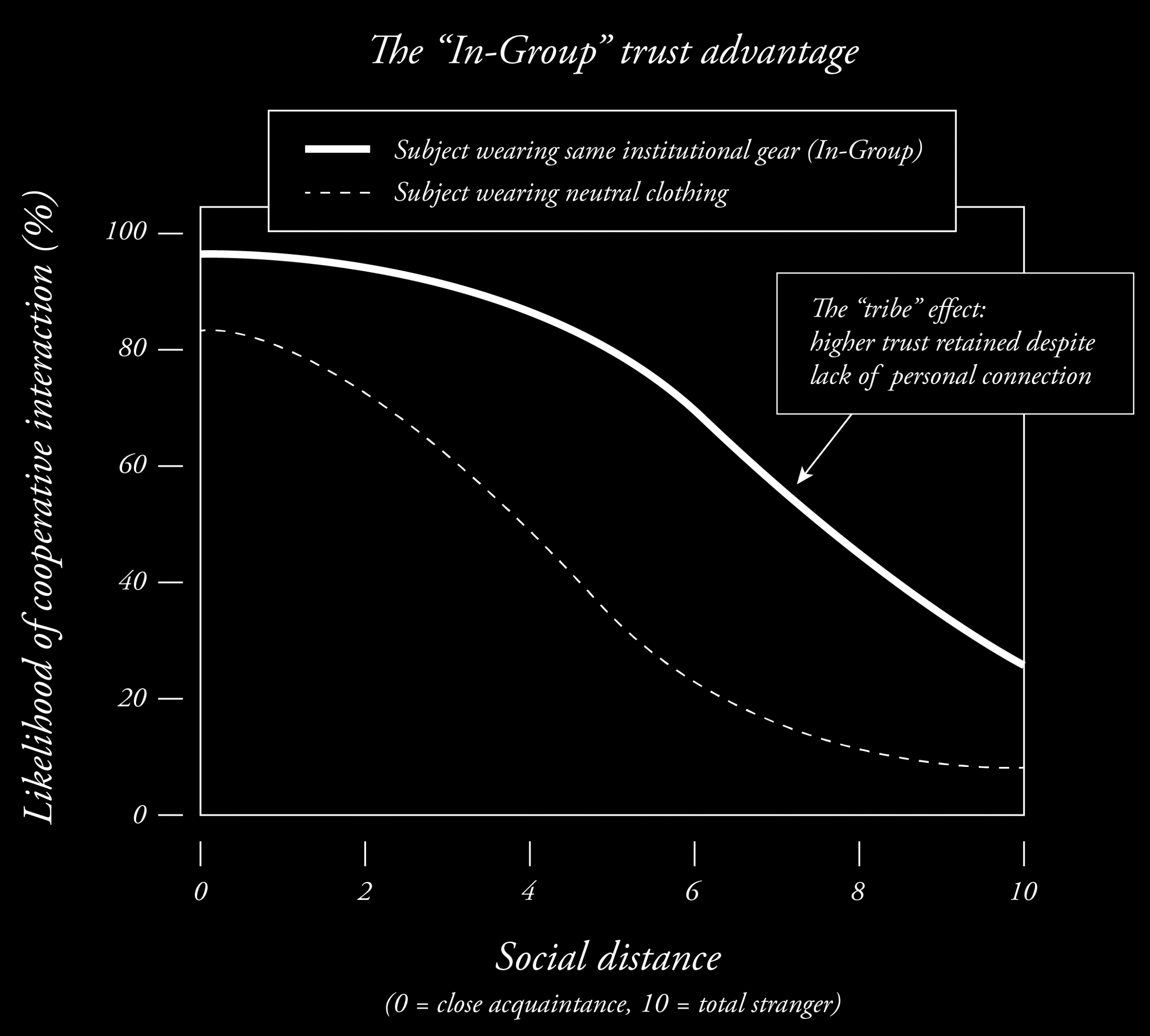
- In-Group vs. Out-Group: the garment creates a visible boundary. Those wearing the name are the “In-Group” (Us), and those without it are the “Out-Group” (Them). This boosts self-esteem because we are psychologically motivated to see our own group as superior.
- Depersonalization: this isn’t necessarily negative. In this context, it means shifting your identity from “I” (unique individual) to “We” (collective prototype). The garment acts as a uniform that signals you have adopted the group’s norms and values, creating intense loyalty and cohesion.

© Olivier Klein


This extremely diverse group of students is not just wearing a brand; they are wearing their collective identity. The shared garment acts as a “totem,” visually signaling their membership in a specific, prestigious “tribe.” This fosters a sense of belonging and safety, as the individual identity is partially subsumed by the powerful group identity.
Cultural capital
This concept comes from French sociologist Pierre Bourdieu. He argued that power in society isn’t just about economic capital (money); it is also about cultural capital—assets like education, style of speech, and intellect that promote social mobility.
- Objectified state: cultural capital can be “embodied” (your knowledge) or “objectified” (material goods). The branded garment is objectified cultural capital. It is a physical object that signals you possess the intangible qualities the institution represents.
- The “receipt” of merit: in a meritocratic society, we are obsessed with earning our place. The institutional garment acts as a “receipt” or proof of verification. It tells the world, “I passed the test to get in here.”
- Transfer of prestige: this is the “halo effect.” By wearing the name, the prestige of the institution (which has been built over decades) is temporarily transferred to the wearer. The wearer becomes more authoritative and respected simply by association.

© Bernard Lambert

The garment here is not just a piece of clothing but a “receipt” of merit and a symbol of authority. By wearing the name of a highly respected and disciplined institution like the U.S. Army Corps of Engineers, the individual embodies the prestige, competence, and power associated with that organization. The jacket itself is a form of objectified cultural capital that commands respect in the public sphere. But why is he standing in front of a dam?



Ah, la moda!
The commercial appropriation of institutional aesthetics by high-fashion and mass-market labels represents a phenomenon of semiotic decoupling, wherein the visual language of authority—heraldic crests, serif typography, and regimented color palettes—is severed from its original meritocratic context. In this exchange, the garment ceases to function as a verified credential of belonging and instead operates as a simulacrum of prestige. Commercial entities extract the semiotic weight of the “academy” or the “regiment” not to signal actual membership, but to vend a curated fantasy of heritage and stability. By donning these decontextualized signifiers, the consumer performs a mimetic appropriation of status, purchasing the visual texture of cultural capital without possessing the underlying institutional affiliation. Consequently, the logo becomes a floating signifier; it no longer points to a specific history or achievement, but rather serves as a hollowed-out aesthetic commodity that allows the wearer to cosplay the stability of established order.

This subject of apparent Asian ethnicity is wearing a jacket that mimics the visual language of a university or athletic department (the “varsity” style, the crest, the “EST. date”), but it is entirely devoid of any actual institutional connection. This is semiotic decoupling in action: the visual signifiers of prestige have been detached from their original meaning and turned into a hollow fashion commodity, allowing the wearer to purchase the look of status without the substance of belonging.